Visiting Museums with Kids

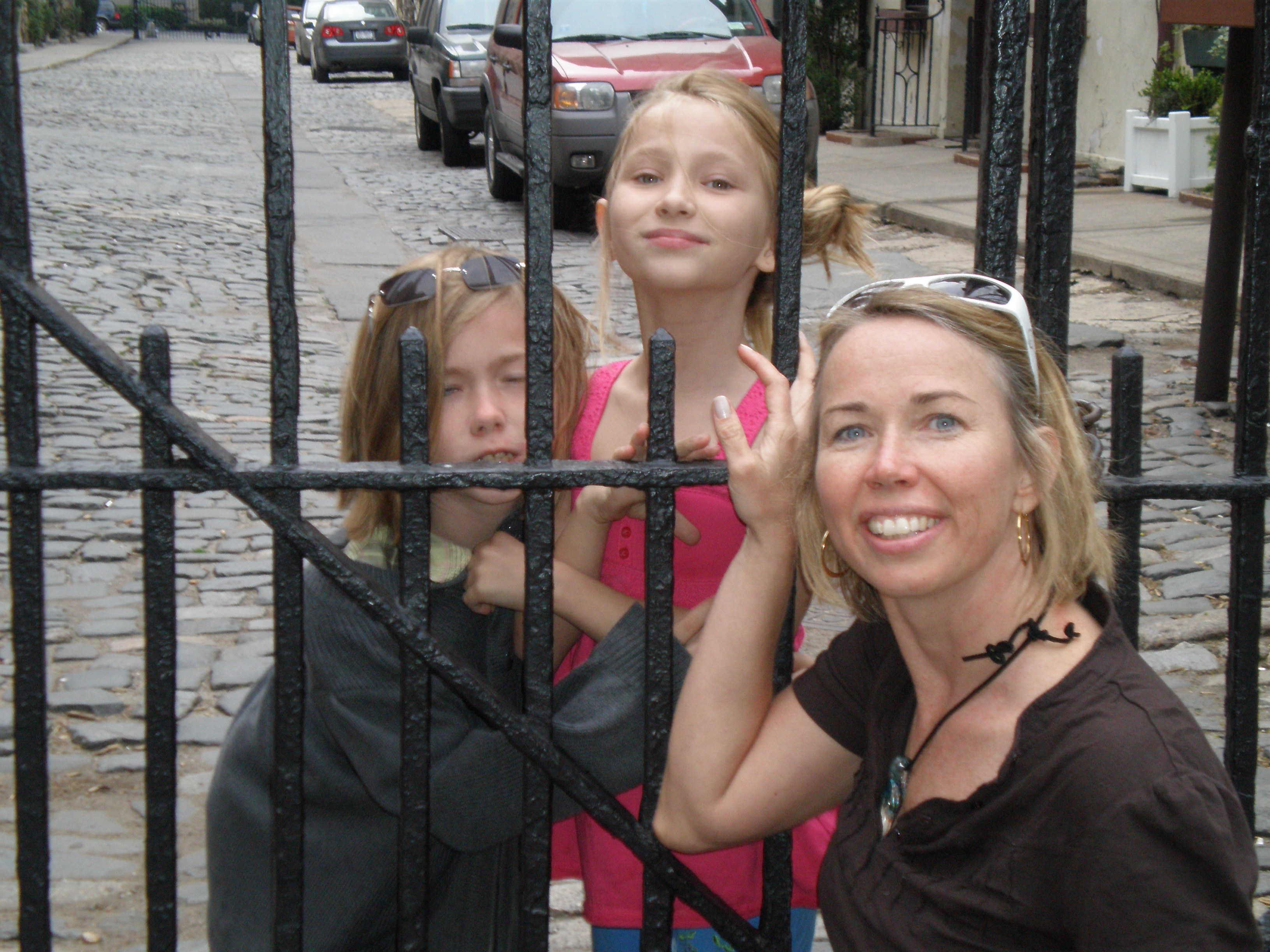
Sometimes when traveling, you follow the leader. Just this week when the kids and I went to Chicago, my mother led us around the Museum of Contemporary Photography.

I loved the exhibit about infrastructure and public works at this free and open to the public museum, http://www.mocp.org, right off Michigan Avenue.

“How cool is this place?” I asked.

“Not so much,” they answered. One of my kids wanted to shop. Another wanted to swim at the hotel pool. And this one, just wanted out.

image

Harry Potter Line Up

image

On the way back from a mani-pedi and on the way to pick up the girls from Monte Carlo (the movie), I noticed our neighbor was waiting in line for Harry Potter (the movie).

She’d gotten there at 5 and the movie starts at midnight. It looked like a fun, festive scene. But I’m glad I’m in bed and not waiting in line for two more hours.

“It’s going to be amaaaaaazing,” our neighbor said.

“Yes,” I said. “It will be.”

The Working Mother’s Guilt

I feel guilty for working. My husband does not work much, but when he does, no one makes him feel bad. It’s a mother thing.

My sister-in-law who owns her own business reported that in a parent-teacher meeting one of the teachers told her, “I can tell that you work outside the home, because your children are very hard workers.”

I think about that conversation a lot. It comforts me. Although I am plagued with guilt – whenever I have to be away from the kids for a night or a late evening for work — I hope that the kids notice, appreciate and feel motivated to work hard too.

I hope women on all sides of the work equation realize that women’s lives are in flux.

One of my best friends whom I met when our kids were in preschool, is a banker. She wore a business suit to the preschool graduation. In my stained sweat suit, I was jealous. I was a stay at home mom, trying to scare up freelance writing work, but  found only new toddler Mommy and Me classes. I contemplated writing a book called Stay at Home Moms: How They Work! Then I landed my fulltime gig.

My friend quit her job. For seven years she was a stay at home mom, working for no pay — as in serving as president of the parent’s association. This year she returned to the paid world of banking.

I’ve been a fulltime working mother since the girls’ toddler years, saving my sweatsuit for the weekends.

I like to think the kids secretly like and benefit from the fact that their mother works hard and is the family breadwinner.

Working Mother magazine reported that ’57 percent of working mothers feel guilty every single day, and 31 percent feel guilty at least once a week.’ I am not alone.

This relates to my Rule Number 7 to Embrace uncertainty. One day you’re a stay at home mom and the next day you’re back in business. Enjoy it. Work hard wherever you find yourself and try not to feel guilty or jealous along the way.

Teaching Children Responsibility

Six years ago, I borrowed a book from my daughters’ preschool. The book was called Teaching Your Children Responsibility. I don’t remember any advice from the book. All I know is that I never returned the book to the preschool lending library.

I have felt guilty about not returning that book for six years. I try to model responsibility and consistency. Sometimes I model guilt and blame.

For the mess in our apartment I like to blame my husband Chris and his Parkinson’s Disease and my children who have no good excuse. And of course I blame myself because I don’t discipline them enough and I would rather write before work and play tennis after work than clean and do laundry. I would rather go out to Happy Hour with my work peeps than make a family dinner. How often have I said, “Let’s order Chinese food again, kids”?

I may be irresponsible but I am happy. I may be guilty but I am keeping the Cottage, the best Chinese restaurant on the Upper West Side in business.

I may be messy, but I am creative. This is what I tell myself. In our country house there is a magnet on the fridge. It says, “A creative mind is seldom tidy.” So true.

This jibes with my Rule Number 5: Expect the best, love what you get. Even from yourself.

Someday I’ll return that library book. Until then, I’ll try loving myself.

Independence Day

I let Hayden, my 14 year old, drive around the gravel road by the country house. He sat tall and proud. He was focused. He handled the minivan around the sharp turn as elegantly as if he’d been driving race cars his whole life. Which in a way he has — all that time in video arcades and gaming devices prepared him well for the finer motor skills necessary to

This was the 4th of July sunset over the Hudson River from the Amtrak train coming back from the country.

motor the family van.

He can’t wait to drive.

On the 5-hour drive to the country, from the backseat, my son asked, “Is it fun to drive?”

I had to think about it. Accelerating is nice. Passing people is sweet. Feeling the breeze from the wide open window is cool. Blaring music is happening.

“Yes, it is,” I said. “Driving’s fun.”

The best part of driving is that you feel independent. While my tall son may believe he’s ready to drive today, the quarter mile loop by the Big House is as far as he will go. He may be ready but I’m not.

Getting Kids to Help

I really yelled at the kids.

“I am working all day, then I come home and I work all night.” I was trapped in the kitchen, lonely, scrubbing pots and pans, loading dishes into the dishwasher. Chris had used every cooking utensil we own to prepare a fancy dinner for a neighbor who’d just come home from surgery.

It was probably the most beautiful night in the history of beautiful nights and I was Cinderella. I’d have preferred eating a PB&J in the park, wiggling my toes in the long summer grass.

I have a Cinderella complex, love to feel martyr-ed and uninvited to the party. But remember Cinderella did get one free night. And on that night, she partied hard. That could be me.

I know I should insist that my kids help. A friend in a caregivers support group said that in looking back at her kids’ childhoods, she regretted doing everything for them — like me, she did so much for her kids because she felt sorry for them and for the fact that their dad had a chronic illness. I don’t want that regret.

Yes, in the school year, I do more for the kids because they have homework or they’re tired. But right now, they’re all out of school. “And kids, Mommy’s tired too.”  It’s true I love my job, but it can be tiring. I wish I lived in the 1950s where the breadwinner comes home, puts his feet on the ottoman, reads the paper and drinks a high ball. Maybe I’ll do that when the kids go to camp. ‘Cause I want to be lazy too.

Until then, I will keep crossing off items from my summer bucket list.

  1. Hold a baby
  2. Go to the IWWG (International Women’s Writing Guild) conference at Yale http://www.iwwg.org/2011-summer-conference
  3. Take art classes with my father and sister in Vermont  http://www.black-horse.com/PDF/Art%20Event%20Flyer%202010.pdf
  4. Take H. and his friends to 6 Flags for his birthday
  5. Continue to work hard and have passion for my day job
  6. Take family to Ocean Grove, NJ, Jones Beach, or Shelter Island over 4th of July weekend
  7. Keep writing every day
  8. Toes in the grass and picnics in Riverside Park as often as weather allows
  9. Get a mani-pedi
  10. Join Improv or comedy class
  11. Meet with agent again on book
  12. Revisit my young adult novel
  13. Read all books for book clubs
  14. Keep working out every day — tennis, Pilates, biking, or running
  15. Visit a church a day once kids go to camp
What’s on your Summer To Do list?
image
I took this picture riding my bike to work yesterday. I felt like I was in the tropics, but I was in Manhattan.

Reversals

In Poetics, Aristotle said — yes, I’m smart like that, quoting Aristotle — we move from ignorance to knowledge, from enmity to friendship, from neutrality to commitment.

Lynne Barrett taught this juicy class on plot at the International Women’s Writing Guild this week at Yale.
In stories, she said, everyone has to have a piece of the puzzle. No one character can hold the whole story.

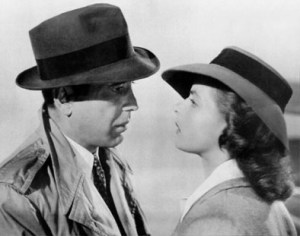
Lynne gave us the timeline from the movie, Casablanca (which I’ve never seen) in which Bogart’s character moves from nonchalance to commitment.

The flashbacks in the story move the story forward. People don’t just ruminate on their past for no reason. The lover’s past (in Paris!) sparks an understanding that propels them to take action.

In all narratives, a reversal is necessary. Cinderella goes from low status to high status. I always taught this in my drama classes, that this is what makes for comedy — a high-status character becomes low-status — or visa versa.

This is why Lynne said the story of Spitzer is a better plot than the story of Schwarzenegger. He fell from the top, not when he’d left office.

But the reversal is not just “who’s up and who’s down.” A secret become public. A single person becomes married.

This class nudged me to reconsider the lame plot in my young adult novel from last year’s NaNoWriMo (national novel writing month).

When I mentioned to Lynne, I had a novel, written in one month, she said, “Yes, Chris Baty, the founder of NaNoWriMo, wrote the book. No Plot, No Problem. No plot? Big problem!”

Incidentally, Barrett taught with my friend Dan Wakefield at Florida International University.

Book Proposal Questions

Melissa Rosati ended her workshop with these questions:

  • Is a book really the right first product for me? I love books. I have already blogged. So, yes.
  • What do I want the book to do for me? Make me a ton of money, earn me some street cred, get my distinct voice out there in the marketplace of ideas.
  • What is the relationship you want with your target audience? To empower people to share their ideas through writing. To inspire writing that leads to personal transformation. But, hmmmm, in terms of relationship, that’s a tough one. I don’t know. How committed does an author have to be to her readers? I’ll answer their emails, comment on their updates, teach workshops, attend readings, read their writing. But, let’s face it, all relationships take time. Do I have the time for another relationship?
  • If you do not have business experience, who are your trusted advisers? This is also a tough one for me. I do not like asking for help. I like being the helper. I’m not sure my peeps are business peeps.
  • What’s your budget? How much are you willing to risk? Ummm, $150 maybe?

These questions come from the workshop The New Rules of Book Proposals which I stumbled into late because the parking garage was literally a mile from the International Women’s Writing Guild classrooms on the Yale University campus. (And having a book published wouldn’t make the parking lot any closer.)

I wish I caught the beginning of the class because I have a lot to learn about book publishing.

Writing the Details

Here’s one of the sparkling gems from Southern writer Pat Carr’s Memoir and Fiction Writing class.

Set the scene with three or four details. Here are ten ideas of what Pat means by sensory details and then an example from me on my story set on a playground.

  1. Odor – wet sand
  2. A time of day or season – end of summer
  3. Temperature – warm and humid
  4. Sound – children laughing
  5. Important object – small charm bracelet
  6. Dominant color – beige
  7. Dominant shape — circles
  8. Something that can be touched – curly hair
  9. Taste – rain in the air
  10. Certain slant of light – late afternoon sun

I love number 10. Pat was inspired by Emily Dickinson. Love Dickinson: “Tell all the Truth but tell it slant.”

Light is so important, I think, as I write from a sun-soaked bench cloistered in a square at Yale University attending the International Women’s Writing Guild conference.

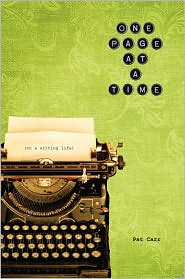
Pat Carr’s writing exercises, like this one, can be found in her book Writing Fiction with Pat Carr. Her new memoir is One Page at a Time: On a Writing Life.

Conflict in a Writing Workshop

I’m too tired from writing. I’ve been writing all day at the International Women’s Writing Guild at Yale University. In my first class I wrote a short short story that I love and want to get published.

I’m almost too tired to tell you about something that happened in my last class — how one of the teachers was talking about how a woman from Jehovah’s Witness came to her door. “I’m rewriting the Bible,” she told the woman. “Today a Psalm. Tomorrow a Lamentation.” And then the teacher showed the evangelist the Adirondack trees ablaze in orange and red outside her window, “These are my burning bushes.”

And the class laughed. But one woman, wearing a batik dress got up. She was behind me. The teacher asked, “Are you leaving because you’re leaving or something I said?” And the woman said, “I’m of that faith. And we believe in the Bible.” She was offended. She did not believe just anyone could write or rewrite the Bible. It was very tense. A few quick words. The student said, “I believe the word can raise the dead.”

“So can my word,” said the teacher. “Can’t we all be prophets?”

“No, not like that.” They disagreed. They stood their ground. “I have to leave.” And the teacher said, “Don’t leave without a hug.” They hugged. The teacher put on a short video. After the video, the teacher said, “We mustn’t live in fear. This is what we’re up against.”

The teacher gave us an assignment to write a blessing, a praise or prayer of gratitude.

After some of us read our writing, the teacher asked for feedback on the conflict with the woman who’d left. One person said, “We all laughed when you said a Jehovah’s Witness came to your door. I feel bad about that.” Another said, “I felt like leaving too.” I said, “I avoid conflict at all costs so I was interested to see how you’d handle it.” The woman beside me said, “It would make a good story.” More than a dozen of us commented on the conflict.

Then we went back to another writing exercise: write something from the Bible from a woman’s point of view. I wrote something funny and true about Martha and Mary.