Writing the Details

Here’s one of the sparkling gems from Southern writer Pat Carr’s Memoir and Fiction Writing class.

Set the scene with three or four details. Here are ten ideas of what Pat means by sensory details and then an example from me on my story set on a playground.

  1. Odor – wet sand
  2. A time of day or season – end of summer
  3. Temperature – warm and humid
  4. Sound – children laughing
  5. Important object – small charm bracelet
  6. Dominant color – beige
  7. Dominant shape — circles
  8. Something that can be touched – curly hair
  9. Taste – rain in the air
  10. Certain slant of light – late afternoon sun

I love number 10. Pat was inspired by Emily Dickinson. Love Dickinson: “Tell all the Truth but tell it slant.”

Light is so important, I think, as I write from a sun-soaked bench cloistered in a square at Yale University attending the International Women’s Writing Guild conference.

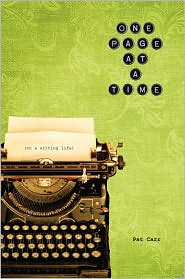
Pat Carr’s writing exercises, like this one, can be found in her book Writing Fiction with Pat Carr. Her new memoir is One Page at a Time: On a Writing Life.

Studying Writing with Madeleine L'Engle

Our first assignment was: pick any character from the Hebrew Bible (Old Testament) and write a story from that person’s view.
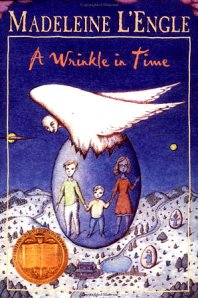
My story was literal and dramatic (that seemed to be the tone of the bible and I write what I believe is assigned). But Madeleine fulfilled the assignment with an imaginative and funny story. We both wrote about the woman in the window at the edge of town.

I remember thinking, “That is NOT the way the story goes, lady. But you’re Madeleine L’Engle, so you can change the bible any which way you want.”

I got in her class because I’d been going to All Angels’ Church — I loved the warmth and elegance of the worship, but was less in love with its evangelic and literal zeal. I wrote about this church when I started my Church A Day visits, the post was called: A Beer, A Bra, Then Church: at: https://mbcoudal.wordpress.com/2010/08/16/

Back to getting in Madeleine’s class, when I worshiped at All Angels’ the pastor, Rev. Goode, invited any regular church goers to sign up for her class.

About a dozen of us met in her home, for a couple of summer months. She lived in a big rambling Upper West Side apartment which I loved and felt I could easily move into — she wouldn’t even know. She seemed to have a lot of guests coming and going.

She was getting old — still classy yet pixie. She held court from a big easy chair.

She liked talking about writing and listening to writing. I remember she liked my work. I felt we were kindred spirits, not only as writers, but because we were both married to actors, which gives a marriage a certain gypsy charm.

Another assignment: Write about a recent ethical dilemma and how as Christians we answered that dilemma.

I vividly remember one young man’s story. He was riding a night train in Europe. After the conductor collected tickets, a man who had been hiding, crawled from beneath the young man’s seat. The stowaway asked not to be given up and hid again beneath the seat. The conductor returned, asking, “Have you seen anyone else in this compartment?”

Should my classmate tell about the man hiding beneath his seat? Would you? It was a scary, true story. And the young man said he tried to think, “What would Jesus do?” I don’t remember how he answered. I only remember that my classmate was still plagued by this dilemma, believing he’d done the wrong thing.

Her class allowed us to admit we might be wrong. We had to be honest and imaginative.

I have to get to work now.

I have no idea why I woke up this morning thinking about Madeleine L’Engle and her writing class. That class was probably 16 years ago.

Maybe it was simply a Wrinkle in Time.

Or maybe I thought of Madeleine because yesterday I wrote about another aging mentor, writer and friend, Bel.  http://mybeautifulnewyork.wordpress.com/2011/05/11/bel-kaufman/
Writing in a Community

I started a lunchtime writing group. The last time we met we wrote poems on fragments of Anne Sexton’s poetry. (Brilliant assignment, Tiffany!)

I cried a little as I wrote my piece. When it came my turn to read the poem out loud, I alerted the group, “I may cry when I read this. Don’t worry about me. Don’t hand me tissues. I am okay. I’m just having feelings.”

I read my piece out loud and two-thirds of the way in, I began sobbing. Literally sobbing, sniveling, gasping-for-breath crying. I don’t know about you, but I don’t like to sob — especially in the middle of the workday and in front of coworkers. That is the time I like to joke around about Toddlers & Tiaras or take a walk in Riverside Park.

But there were things bubbling up in me. A sadness around the shifts and losses in my marriage, due to my husband’s Parkinson’s Disease.

Here’s the story: I cope really well. I work out. I write. I share my feelings. I lean on my friends. I feel alone. I love my kids. I love my job. I love my communities. But, at times, I feel and I am alone. And I am sad.

There was something healing about writing about and reading this piece to a writing group — a community of real people in real time and in a real place. We wrote together and then we listened to one another read.

Our meeting is simple. We rotate leaders. The leader picks a topic and then we write for 20 minutes. Then we go around and read what we’ve written. We have written about other things too — our childhoods and our rituals.

There is an alchemy to being a part of a community of real writers. The other day I wrote on my other blog What is Community? https://mbcoudal.wordpress.com/2011/05/07/what-is-community/

It is hard work, passion and diversity. This lunch time writing group has and is all that. We meet again tomorrow at 12:30. Join us.

If it's fun, it's good

“We buy these difficult books because we feel that, while not very exciting, they are in some way good for us…It’s a sort of literature-as-bran-flake philosophy: If something is dry and unpalatable, it must be doing some good to our constitutions.” (No Plot? No Problem! by Chris Baty)

I have written about how I loved NaNoWriMo (National Novel Writing Month). Such a creative, fly-by-the-seat-of-your-pants, positive way to write a novel.

“With his startlingly mediocre prose style and complete inability to write credible dialogue, Chris has set a reassuringly low bar for budding novelists everywhere,” says Chris Baty about himself, the founder of NaNoWriMo. Awesome. http://www.nanowrimo.org/

I love that. So funny.

See, sometimes I feel — especially at work — that the most morose, the most academic, the most acerbic, that person wins. The one who puts others down? Yup, he or she  gets respected, if not promoted. But what about the nice guy/gal?

Hello! It’s harder to remain positive than to go negative.

It’s easier to be Debbie Downer than Ula Upbeat! Just because someone is negative, doesn’t mean they’re smart and right. And just because someone is positive, it doesn’t mean they’re dumb and wrong.

Ever since the leadership academy, I’m starting to see a shift in the culture of meetings and conversations at my workplace. People are affirming one another more. People are acknowledging that it’s okay to have fun at work. It’s okay to compliment one another’s work or unique style. It’s okay to be creative and, even, passionate.

At the library, I do have the impulse to choose the weighty, solemn and classic tome, but in fact, I should choose the fluffy, fun and juicy book. It’s more palatable. Just because a food tastes good, doesn’t mean it’s bad for you. Mother’s milk is very sweet.

And blueberries? Fun, yummy, good for you.

Just like “No Plot? No Problem!” Chris Baty’s funny, simple, profound how-to. Reading this book has got me psyched for next November when NaNoWriMo takes off again. Anyone want to join me? It’s more fun than eating bran flakes. And when the bar is set so low, everyone can cross!