Why I Write

We do not write to be understood. We write to understand. – C.S. Lewis

This was one of the quotes from Writing for the Soul, a workshop led by Rev. Lynne Hinton in Albuquerque, New Mexico at the United Methodist Association of Communicators. She has written 14 novels. Yes, 14! Oh, to be so prolific.

Tomorrow, Nanowrimo starts so I’m hoping to write one more novel this month!

In Rev. Hinton’s workshop, we began with free writing à la Julia Cameron’s admonition in The Artist’s Way to write three morning pages — which I have been practicing for about 15 years. Every morning, I hand write three pages of brain drain. But give me free rein later in the day to tap into my unconscious and I’m, oh so happy.

Lynne gave us an exercise where we chose random words, picked like wild flowers from our unconscious, to add to word prompts, like these (but not these, exactly!):

Diamond _____

Shelter _____

Instant _____

Prayer _____

Barcelona _____

Boo _____

Avoid _____

Teacup _____

Angel _____

School _____

Write _____

Create _____

Ocean _____

Sun _____

Venice _____

June ____

Moon _____

You get the idea. We wrote our own couple of dozen words down the page on the blank lines. From our written words or the provided prompts, we made sentences on bits of paper. Then we shuffled our sentences and wrote them down in a poem format.

How fun! Our internal censor didn’t even know we were writing a poem, we were just playing around! Writing is play!

It’s impossible — at least, for me — to attend a writing workshop and not make new friends. I find the adage so true —  A stranger (or a fellow writer) is just a friend I haven’t met yet.

Often in writing workshops, my friends and I drop into such a deep level of sharing that we cry when we hear each other’s work. I felt this way hearing the poems of my fellow writers, Jessica Connor, Beth Buchanan, Kerry Wood and Isaac Broune. I was blown away as they unearthed playful and meaningful poetry from their unconscious.

I am so grateful for the wisdom of fellow writers, writing teachers and my own ability to tap into my unconscious on a regular basis. Going a little crazy in my writing keeps me sane!

The Westport Workshops

Went well.

I love when people open up — give me stories about your divorce, depression, cancer treatment, or dysfunctional childhood. And then half-way through your writing, lay it on me about how you handled the whole thing with faith, resilience, humor, or alcohol.

Better yet, write about your most embarrassing moment — the time you felt so humiliated you thought you’d never crawl back into civilized company again. You’ve got an epic fail? You’ve got an epic tale.

The stories of our struggles are the ones that will get published, get a laugh, get a tear, get a friend to open up on her crappy/crazy/resilient/hopeful life.

I’m not saying we wrote about any of these things (Maybe we did, maybe we didn’t!) at the Westport Creative Writing workshops, which I offered the last three Saturdays of August 2011 at the Heritage House.

But even if we did, I wouldn’t tell you, because the rule in my writing classes is confidentiality.

I will tell you generally what we wrote about — in the first class, among other topics, we wrote about a safe place from our childhoods; the second class, we wrote about our mentors from high school; the third class, with Hurricane Irene on her way, we wrote about riding out a storm (literal or metaphorical).

At the first class, we had 6 people, then 3, and then at the last class, 8. Hooray! It felt great. There were so many brilliant writers with brilliant life stories. It was an honor to be a part of and facilitate a creative writing experience for non-writers and professionals alike.

I believe there is something healing and transformative about writing your life story. It is sometimes unbelievable, but never never dull.

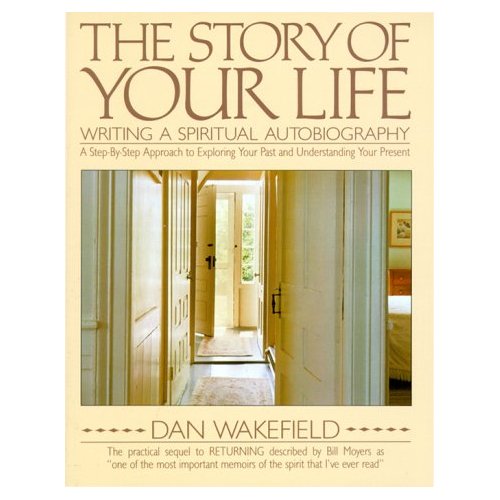
I will offer these “Story of Your Life” workshops (inspired by Dan Wakefield’s book of the same name) again.

Next 3 Saturdays Writing Workshop

Excited to be leading The Story of Your Life at the Heritage House in Westport, New York this Saturday morning. At this community center, I’ve struck a yoga pose and smiled at the plein air art shows. All in one place, my favorite things: yoga, art, and, now, for the last three Saturdays in August, from 10:30 to noon, creative writing.

This is Dan's book that inspires the workshop, The Story of Your Life.

The Heritage House http://www.westportheritagehouse.com/ was once a federated church, Baptist and Methodist. Now it is a visitor center and home to a community art show, the title of which I love — The Spirit of Place. I want to build the spirit of place into the writing workshop.

The Story of Your Life is inspired from the workshops led by my friend and mentor, Dan Wakefield, who also wrote a book by the same name. http://www.danwakefield.com/ If you’re anywhere in the Adirondack region, please join me in this place.

I sent this blurb to some Adirondack newspapers so I hope we get a few people:

Write about your life — from childhood through the present day –- the small, quiet moments and the large, public events. In this creative, supportive, and fun workshop, you will discover threads of humor and meaning through writing and sharing your writing.

This hour and a half workshop is intended for the experienced, casual, and non-writer. ($10/class)

The workshop is led by Mary Beth Coudal, a writer and teacher, whose essays have appeared in the New York Times, Self magazine, and other newspapers, magazines, and websites. Mary Beth blogs about creative writing at: http://gettingmyessayspublished.wordpress.com (that’s this blog, heh). She also writes about the spirit of New York at: http://mybeautifulnewyork.wordpress.com/ and she writes a lot more than that too.

And now I’m writing this blog in the third person, the first sign of narcissistic tendencies, so I must stop writing and start reading. As the saying goes, enough about me, What do YOU think about me?

Visiting Museums with Kids

Sometimes when traveling, you follow the leader. Just this week when the kids and I went to Chicago, my mother led us around the Museum of Contemporary Photography.

I loved the exhibit about infrastructure and public works at this free and open to the public museum, http://www.mocp.org, right off Michigan Avenue.

“How cool is this place?” I asked.

“Not so much,” they answered. One of my kids wanted to shop. Another wanted to swim at the hotel pool. And this one, just wanted out.

image

Independence Day

I let Hayden, my 14 year old, drive around the gravel road by the country house. He sat tall and proud. He was focused. He handled the minivan around the sharp turn as elegantly as if he’d been driving race cars his whole life. Which in a way he has — all that time in video arcades and gaming devices prepared him well for the finer motor skills necessary to

This was the 4th of July sunset over the Hudson River from the Amtrak train coming back from the country.

motor the family van.

He can’t wait to drive.

On the 5-hour drive to the country, from the backseat, my son asked, “Is it fun to drive?”

I had to think about it. Accelerating is nice. Passing people is sweet. Feeling the breeze from the wide open window is cool. Blaring music is happening.

“Yes, it is,” I said. “Driving’s fun.”

The best part of driving is that you feel independent. While my tall son may believe he’s ready to drive today, the quarter mile loop by the Big House is as far as he will go. He may be ready but I’m not.

Reversals

In Poetics, Aristotle said — yes, I’m smart like that, quoting Aristotle — we move from ignorance to knowledge, from enmity to friendship, from neutrality to commitment.

Lynne Barrett taught this juicy class on plot at the International Women’s Writing Guild this week at Yale.

In stories, she said, everyone has to have a piece of the puzzle. No one character can hold the whole story.

Lynne gave us the timeline from the movie, Casablanca (which I’ve never seen) in which Bogart’s character moves from nonchalance to commitment.

The flashbacks in the story move the story forward. People don’t just ruminate on their past for no reason. The lover’s past (in Paris!) sparks an understanding that propels them to take action.

In all narratives, a reversal is necessary. Cinderella goes from low status to high status. I always taught this in my drama classes, that this is what makes for comedy — a high-status character becomes low-status — or visa versa.

This is why Lynne said the story of Spitzer is a better plot than the story of Schwarzenegger. He fell from the top, not when he’d left office.

But the reversal is not just “who’s up and who’s down.” A secret become public. A single person becomes married.

This class nudged me to reconsider the lame plot in my young adult novel from last year’s NaNoWriMo (national novel writing month).

When I mentioned to Lynne, I had a novel, written in one month, she said, “Yes, Chris Baty, the founder of NaNoWriMo, wrote the book. No Plot, No Problem. No plot? Big problem!”

Incidentally, Barrett taught with my friend Dan Wakefield at Florida International University.

Writing the Details

Here’s one of the sparkling gems from Southern writer Pat Carr’s Memoir and Fiction Writing class.

Set the scene with three or four details. Here are ten ideas of what Pat means by sensory details and then an example from me on my story set on a playground.

  1. Odor – wet sand
  2. A time of day or season – end of summer
  3. Temperature – warm and humid
  4. Sound – children laughing
  5. Important object – small charm bracelet
  6. Dominant color – beige
  7. Dominant shape — circles
  8. Something that can be touched – curly hair
  9. Taste – rain in the air
  10. Certain slant of light – late afternoon sun

I love number 10. Pat was inspired by Emily Dickinson. Love Dickinson: “Tell all the Truth but tell it slant.”

Light is so important, I think, as I write from a sun-soaked bench cloistered in a square at Yale University attending the International Women’s Writing Guild conference.

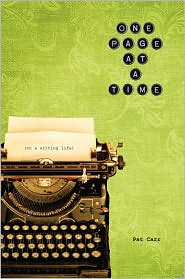
Pat Carr’s writing exercises, like this one, can be found in her book Writing Fiction with Pat Carr. Her new memoir is One Page at a Time: On a Writing Life.

Conflict in a Writing Workshop

I’m too tired from writing. I’ve been writing all day at the International Women’s Writing Guild at Yale University. In my first class I wrote a short short story that I love and want to get published.

I’m almost too tired to tell you about something that happened in my last class — how one of the teachers was talking about how a woman from Jehovah’s Witness came to her door. “I’m rewriting the Bible,” she told the woman. “Today a Psalm. Tomorrow a Lamentation.” And then the teacher showed the evangelist the Adirondack trees ablaze in orange and red outside her window, “These are my burning bushes.”

And the class laughed. But one woman, wearing a batik dress got up. She was behind me. The teacher asked, “Are you leaving because you’re leaving or something I said?” And the woman said, “I’m of that faith. And we believe in the Bible.” She was offended. She did not believe just anyone could write or rewrite the Bible. It was very tense. A few quick words. The student said, “I believe the word can raise the dead.”

“So can my word,” said the teacher. “Can’t we all be prophets?”

“No, not like that.” They disagreed. They stood their ground. “I have to leave.” And the teacher said, “Don’t leave without a hug.” They hugged. The teacher put on a short video. After the video, the teacher said, “We mustn’t live in fear. This is what we’re up against.”

The teacher gave us an assignment to write a blessing, a praise or prayer of gratitude.

After some of us read our writing, the teacher asked for feedback on the conflict with the woman who’d left. One person said, “We all laughed when you said a Jehovah’s Witness came to your door. I feel bad about that.” Another said, “I felt like leaving too.” I said, “I avoid conflict at all costs so I was interested to see how you’d handle it.” The woman beside me said, “It would make a good story.” More than a dozen of us commented on the conflict.

Then we went back to another writing exercise: write something from the Bible from a woman’s point of view. I wrote something funny and true about Martha and Mary.

Criticize or praise?

I am a huge fan of praise. I love telling my colleagues, my kids, my friends, “Hey, great job.”

Last night at an opening night party (yes, I’m cool like that) for a new play, Unnatural Acts, at the Classic Stage Company, I saw Annika Boras, the actress who played Lady MacBeth there. I gushed, “You were so good.” And besides being brilliant — she’s beautiful and nice too! (It’s so great when that all comes together.)

I said, “Wow, great job. Love your work,” to Senator Chuck Schumer a month ago when I saw him at Jones Beach walking the boardwalk. http://mybeautifulnewyork.wordpress.com/2011/05/29/why-was-our-senator-at-the-beach-today/

Just because I love giving praise, doesn’t mean everyone does. Or that everyone should.

I probably don’t receive as much praise as I give to the people in my life, like my spouse — people with Parkinson’s Disease are not known for being effusive. I do praise myself and give myself some positive self-talk. “Wow! MB! You were incredibly productive and creative today!” Yes, I have been known to kiss the mirror. (“You look good, MB!”)

I wonder if I need need more than most in the affirmation department. I may just be cut from a cloth that likes to give and receive kind words, being one of five kids from a slightly (?) dysfunctional family.

You may say, “It’s fine to praise yourself, crazy lady, just don’t over-praise your kids. The way everyone receives a medal, even if they came in last or simply existed.” To you, I say, “What?! What am I supposed to do? Tell them ‘Win next time.’ I love my kids unconditionally. I do try and praise effort most of all, being a fan of hard work. But I tell them all the time that I love them and that they are awesome. So sue me! I overpraise!”

My kids are more brilliant, beautiful, and sweet, even than Lady MacBeth. Not that I’m comparing. (That’s the kiss of death — compare and despair!)

Several business articles lately have backed me up on my penchant for praise. Praise is important in the workplace, actually, more important than criticism.

http://www.inc.com/articles/201106/how-to-fast-forward-your-goals_pagen_3.html  I like the way this article acknowledges that we don’t achieve anything alone; all achievements are the result of collaboration. And we ought to acknowledge our collaborators.

How much praise do we need to hear? And why are we so good at correcting one another rather than praising them? The Harvard Business Review offers some insights: http://blogs.hbr.org/hill-lineback/2011/04/why-does-criticism-seem-more-e.html?cm_mmc=email-_-newsletter-_-management_tip-_-tip062311&referral=00203

This is also what all the strengths-based learning is about. Lead with your strengths. Do what you’re good at it. To find what you’re good at, praise yourself. If that’s too weird, start by praising someone else and work your way back home.

Social Media Mania

I’ve been trying to post on one of my blogs every day for the month of June. Yesterday I was dragging. I didn’t have anything to say, couldn’t come up with a good idea, had too many social occasions to attend. One of those occasions was our monthly Lunch and Learn workshop which is a venue for our brilliant Communications staff to share their expertise.

At yesterday’s lunch, Beth Buchanan of the web team gave an awesome Prezi.com session. The title? Social Media Mania. It inspired and informed the two dozen of us there, half of us experts (ahem! like moi?) and half beginners (moi aussi!). After Beth’s session, I felt energized to get through my slog of a daily blog.

Here are a few take-aways from Beth.

Beth's profile pic!

How do we get into social media?

  1. Sign in
  2. Listen
  3. Engage
  4. Evaluate

I’m not particularly good at Numbers 2 and 4, but I am going to be!

Buchanan emphasized a few best practices for social media. Such as “Do onto others as you would have them do unto you.” In other words, think before posting.

Social media is a conversation, not a monologue, she said. So don’t swamp people with your point of view without taking an interest in theirs.

Another novel concept — and why haven’t I thought of this? — Have a social media strategy and make it work for you. To get thinking about this, start with the question, Who is my audience? (How am I supposed to know!)

I loved some of Beth’s quotes (and did tweet them during the session), like this one: “You establish who you are by what you post.”

On Twitter, Beth said if you’re tweeting for a company — for every three business posts, include one personal post. Duh! I microblog on Twitter for New World Outlook magazine @NWOMag and for myself @MaryBethC but I don’t cross-over; personal is personal and business is business. But I’ll try to cross-pollinate, just like Beth Buchanan, the social media maven at Global Ministries, does. Thanks, Beth! @BJBuc and @connectNmission !

Beth is the friend and colleague who got me started on blogging, Facebook and Twitter. And now there’s no stopping me! At least for the month of June!