Mother-Daughter Book Club

We had our first mother-daughter book club a week or so ago. Four mothers and six daughters sat on the floor and the comfy chairs around a coffee table that held wine glasses, juice boxes, and snacks on paper plates.

I love talking about what I’m reading. I love “comparing and contrasting,” a favorite assignment from my middle school English teachers. I love reading and discussing books so much that I even got my Master’s in literature. I missed it.

When my girls were toddlers, I jumped at the chance to start a book club with fellow mothers of preschoolers. Now our kids are middle schoolers. We’ve been meeting monthly for about eight years. We go on a long weekends together once a year. (Last year we went to Napa Valley and the year before to South Beach. For the trip we read a book set in or about that place.)

For our first mother-daughter book club meeting in March we all read Betty Smith’s A Tree Grows in Brooklyn. For our next book we were choosing among these books:

Deenie by Judie Blume

The Egypt Game by Zilpha Keatley Snyder

The Westing Game by Ellen Raskin

The Color Purple by Alice Walker

The Secret Order of the Gumm Street Girls by Elise Primavera

Wind in the Willows by Kenneth Grahame

The Witch of Blackbird Pond by Elizabeth George Speare

And the last book won! I can’t wait to read it and discuss it. I can’t wait to be a mother who talks to her kids about important things, like literature.

Daily Blog

For about 66 days I posted on one of my four blogs every single day. I started January 1, 2011.

I may keep up the daily habit or begin to post weekly.

Here’s how I did it:

1) Connected with a community of writers (Twitter, Facebook, 43Things, MediaBistro) 2) Gave myself permission to write only 100 words 3) Wrote early in the morning, late at night (and occasionally on my lunch hour) 4) Told myself ‘It will only take you 20 minutes’ 5) Showed my vulnerabilty 6) Showed my awesomeness.

For extra credit: 

1) Included photos 2) Told a story with a beginning, middle and end 3) Promoted books and philosophies I believe in 4) Piggybacked on other bloggers’ good ideas 5) Commented on others’ blog posts.

What I learned:

1) That writing improves your self esteem 2) That there is always something to write about 3) That I began to organize my life and thoughts around the four different blog areas — fitness, writing, spirituality and New York 4) That how-to posts and completely honest posts were the most popular 5) That my writing, especially the first couple of paragraphs, have to be simple and not witty (Humor comes later. Explaining the point of what I’m writing comes first.)

Quoted

Yesterday I grabbed a newspaper off my desk to read while waiting for the Riverside bus home. I found the cover story, “Unplugged: Tech sabbath strengthens connection to God,” very interesting, because I frequently contemplate and write about How much connectedness do we really need? And then I found the article extremely interesting and surprising and yes, smart, because I was quoted in it. http://www.umportal.org/article.asp?id=7622

I loved this article written by Mary Jacobs for the The United Methodist Reporter, especially upon seeing my own name. I thought, wow, I’m an expert and I’m quotable. I kept reading the article hoping I might be quoted again. But I was not. Still, I was excited.

As soon as I walked in the door I bragged to my son, “Hey, I’m quoted in a newspaper article.”

“What did you say?” he asked. So I read him my quotable quote:

Mr. Burton-Edwards thinks multi-tasking can fragment the spirit and soul, too. Constant interruptions affect our ability “to be attentive to people, and to be in the moment,” he says. “They wreak havoc on our focus.”

Mary Beth Coudal, a staff writer for the General Board of Global Ministries, has seen that in herself.

“Social media has contributed to my short attention span,” she writes in a blog. “I’m beginning to wonder if this constant social media chatter is drowning out my ability to listen to the ‘still, small voice of God.’” She cited a co-worker who called the constant digital distraction “a traffic jam in my mind.”

My son was unimpressed. In fact, he was dismissive, “You sound like a religious freak. Like a crazy killer obsessed with God who hears voices.” I was amused AND offended.

I was taking a hiatus from blogging, but seeing my name in a newspaper article reinvigorated my commitment to my daily blog postings, including this one, dedicated to the Connected Life.

When you’re quoted once, you want to be quoted again.

Rule #2 Escape Through Literature

I hope my kids always think of me as someone who loves to read. I think of my parents as book lovers.

When I remember my mother from my childhood, I remember her head bowed to a book, especially late into the night. My mother- in-law was like that too; she always had a book close at hand.

I think reading helped my mother and mother-in-law cope with their respective tasks and stresses of each raising five children. And it wasn’t nonfiction, how-to books that they read. No, they found their answers in literary fiction. They read heavy hitters like EL Doctorow, John Fowles, Doris Lessing, and Margaret Atwood.

Reading, like meditating, does good things to the body. I’m sure there’s some science that shows physiological benefits to the body when we curl up with a book — the heart rate slows and the breath gains depth. We enter another world when we read, as if in a trance. We focus intently and we lose ourselves.

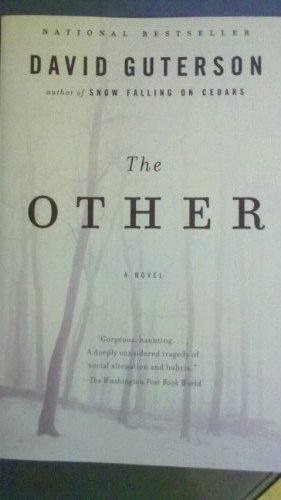
When I am stressed from working or parenting, I grab a book. Right now I am reading “The Other,” by David Guterson. It is good literary fiction, a great way to escape. I have to bow my head to it now.

Huff Po Editor Talks About AOL Merger

Alana B. Elias Kornfeld, the Living section editor at Huffington Post, told the Religion Communicators Council yesterday she is not sure how the AOL-Huff Po merger will play out.

But she does know that some trends will definitely remain worthy of reportage — like the green movement and our need to unplug.

I find it ironic — and cool — that a plugged-in website advocates unplugging from the web. Don’t get me wrong. I’m a fan of living off the grid. I renamed this blog The Connected Life because I’m trying to connect more to family and friends through face time rather than Facebook time.

On religion, Kornfeld said Huffington Post is not interested in religion — as in the politics of religion — but in religion — as in providing a “Space that gives rise to an inspired experience.”

I’m a fan of share and inspired experiences. And a lot of people are fans of Huffington Post — 56 million unique visitors per month and they’re expecting at least 200 mill more with the AOL merger. Kornfeld said that AOL has a loyal brand following, while Huff Po has substantive content. Nice when big brand marries big content!

I am a fan of Alana’s. And of Arianna’s. I met Arianna a long time ago and kinda knew she was going places.

I love what Arianna’s been saying lately about our need to get more sleep! (my post from last month, inspired by Huffington’s Ted Talk:  http://gettingmyessayspublished.wordpress.com/2011/01/09/get-up-early/ ) I’d like to say more about yesterday’s luncheon, but you guessed it, I’ve got to go to bed!)

Incidentally, yesterday’s RCC was held at the Opus Dei headquarters on 34th and Lexington. Really nice and clubby, reminded me of the Yale Club. Nicer than the Church of Jesus Christ of Latter Day Saints near Lincoln Center where the RCC met last month.

The RCC is a great group. At the annual gathering this year in Little Rock, Arkansas, Abderrahim Foukara, Head of Al-Jazerra in the US will deliver the keynote address. http://www.religioncommunicators.org/ Should be interesting.

Pile on the Book Groups

My first book group is reading Guterson’s “The Other.” My mother/daughter book group is reading Smith’s “A Tree Grows in Brooklyn.” My office book group is reading Zusak’s “The Book Thief.”

My #1 Rule is Pile on the People and my #2 is Escape through Literature. But I may be outdoing myself. 

On a night like tonite, when I’ve finally finished my writing, the dishes, and homework patrol, I don’t know which book to open. Rather than choosing any one, I let all of them languish. It’s not just the books, but my classmates’ “Bootcamp for Journalists” writing assignments. And on the Kindle, I’m in the middle of Miller’s “Blue Like Jazz” and Brown’s “The Lost Symbol.”

I lump them all and dive into a long article in The Atlantic or The New York Times magazine.

Why do I place so many reading demands on myself? I like drowning in literature.

And maybe one of my rules could serve as an antidote to my habit (compulsion?) to pile on too many book groups and too many books: Rule #5 “Expect the Best/Love What You Get.”

On Facebook, Megachurches, and Brevity

Episcopal priest and social media expert, Tom Ehrich, began his talk on social media with a bunch of paper handouts — extremely gloomy charts showing the steady and certain downward march in Episcopal church attendance.

“The world of the 1950s ended a long time ago but churches hung onto it. We are the corner hardware store in a Home Depot world,” Ehrich said. People laughed uncomfortably.

For the record, I still love corner hardware stores. I like to say “Gene Doubray” (dzień dobry) to the Polish guys who own the hardware store on 72nd Street. I have never been in a Home Depot. But I like their commercials that show older women as experts. I digress, back to last week’s luncheon. Here are my takeaways:

Facebook

How does Facebook work?No one knows.” (Someone must know!) “Facebook is a mystery. Facebook tells your friends ‘Here’s what I’m caring about today.'”

Update your church’s Facebook frequently and recruit people to attend your church. Inviting doesn’t work; recruiting does (recruting always sounds militaristic to me).

Give people what they want. When people come to a church they may have questions. But the questions they have will be ones about their own lives — “Should I send my kid to private or public school?” they ask. They don’t ask, “What is your Sunday school like?” Ehrich said. True, true.

Create buzz. Let churches “touch people,” not “create members.” True.

Why do restaurants in New York not have to advertise? Restaurants get business by generating buzz, Ehrich said.

Megachurches

Getting people to attend Sunday worship is not enough. Churches have to be open 7 days/24 hours a day.

“Sunday is for tourists,” Ehrich said. He gave an example that Rick Warren’s megachurch, Saddleback Church, has its real worship on Wednesday nights, not Sundays.

“The Megachurch is not the enemy. They have methods that work. They greet newcomers. Train leaders.” Warren’s goal was to start 2,000 new small groups in a year; that is, 20,000 new members.

Megachurch Willow Creek sends an email newsletter that reaches 3 million readers. (I’m not sold on e-newsletters.) In his weekly Willow Creek e-newsletter, Bill Hybels, the founder, has passion and enthusiasm for upcoming sermon.

In his e-newsletters, Hybels writes, “Please come. If you can’t come, please pray for me.” That is cool. (How often do grown men asked to be prayed for? Love it!)

Full disclosure: for several months as a teenager in Park Ridge, Illinois, I was a part of Son City, which Bill Hybels founded. It was really fun. I don’t remember him specifically, but I remember that I sang rockin’ Christian songs in a big auditorium. I’m not a singer, but I remember thinking I sounded really good. I loved the idea of Son City, especially when I heard rumors that kids were allowed to run around and have chicken-fights in the church aisles of the South Park Church. I digress.

Digression on blogs may be unnecessary.

Brevity

Ehrich was a proponent of brevity. On Twitter: “140-character limit is magic,” Ehrich said.

Ehrich blogs daily. I love that. His word limit is 100 words. My blog posts tend to exceed that. (This one’s up to 560!). A blog doesn’t need to be friendly but can establish you as an expert. (I wonder if my blog(s) are making me an expert at anything.)

Another takeaway: Social media is a good tool for networking but not for controling. And these luncheons are definitely good for networking and sparking lively conversations about religion and media.

Ehrich’s blog and web pages can be found at: http://www.morningwalkmedia.com

The November RCC (Religion Commnicators Council) luncheon was held near the United Nations at the Episcopal building on 43rd and 2nd. The RCC luncheons and events are always provocative.

10 minutes a day

I work on my unwieldy novel most days for so little time. It’s the Swiss cheese method of writing. You just poke a tiny hole in the task. You punch a moment into that insurmountable infinity.

I read this method in Alan Lakein’s book, “How to Get Control of Your Time and Your Life” a long time ago when I was Barbara Weaver’s assistant in the Women’s Division. Sometimes I wish I was somebody’s assistant again. More often, I wish that I had an assistant!

“The underlying assumption of the Swiss cheese approach is that it is indeed possible to get something started in five minutes or less. And once you’ve started, you’ve given yourself the opportunity to keep going…Swiss cheese is supposed to lead to involvement,” Lakein says. I’m not so sure.

I start my Stopwatch app. And I glance at the numbers. Occasionally, I will go past 10 minutes, but usually, I watch the time flip over to 10:00 and then I go, “Phew.” I put the novel away. The Swiss cheese method has not led me into the zone. I do love to enter the flow of writing — when time passes without being noticed. When writing is bliss. I like that. But it’s okay when it’s Swiss cheese too. It’s something. It’s edible.

The End of Men?

A report by Hanna Rosin in The Atlantic‘s July/August cover article, “The End of Men,” subtitled “How Women Are Taking Control — Of Everything” is so good. http://www.theatlantic.com/magazine/archive/2010/07/the-end-of-men/8135/

The previous month’s cover story, “Fat Nation” with an obese Statue of Liberty on the cover was also really provocative. The magazine is just so good at noting and analyzing trends in the nation. I love following trends. And this one’s pretty interesting.

One trend noted — and I so hope this is true — is that companies are looking towards an effective and new kind of leader, a transformational one.

My one worry about women taking over is that I like partnership. It’s cliche but it’s true. “Don’t walk ahead of me, I may not want to follow. Don’t walk behind me, I may not want to lead. Just walk beside me and be my friend.” I thought that equality — not superiority — was what the women’s movement was all about. That, and equal pay.

I still think that’s what it’s about. Because while I am excited that women are taking over, I know that women are not being paid fairly for their new leadership and on-going labor. Women are still paid about 80 cents to every dollar that a man earns. Until there is no wage gap, men are probably not too worried that their end is near. Although, perhaps, it is.

Wired to Care

I had an absolutely awful day at work last week. And I felt, “Shoot. My problem is that I care too much. I like getting a gold star. I like being appreciated. My caring for others, wanting them to care about me — This is my failing, my Achilles Heel. I should care less. I should be crabby. Then people will respect me. I will definitely get ahead if I am critical and negative in my job, instead of being caring and collaborative.”  

My sister has said that she and I are alike, “We are just wired to care.” Then I saw that same expression – Wired to Care — in someone’s Twitter feed. So I followed the link to this lovely website, promoting a book by the same name. (And as I’ve mentioned on this blog, I like reading book reviews and visiting book blogs and yes, occasionally, I like reading books too!)

http://www.wiredtocare.com/

On this site, the author of the book , Dev Patnaik, talked about how corporations like Target and Ford have discovered that if their employees care about their customers, care about their products, care about one another, the workers are more productive. I’m sure the workplace is more pleasant. Why does the power of empathy surprise me?  

My mouth hung open as I listened to Dev talk. I had to Google a management expert to be reminded that kindness and caring, these are not failings, these are assets. And companies like assets.

At St. John the Divine Church, about a year ago, I heard another lovely, smart person, Sharon Salzberg, talk about the Buddhist practice of Loving Kindness. In fact, she wrote a book called, “LovingKindness.” This is an excerpt:

http://www.beliefnet.com/Faiths/Buddhism/2000/07/Learning-About-Lovingkindness.aspx

I am glad there are authors and smart people promoting the practices of kindness and empathy in homes, schools, workplaces. It takes courage. And it affirms my way of being in the world, my way of caring too much. I have to admit that at times, I am afraid to be empathetic because my colleagues may see me as foolish or intellectually light-weight, neither of which I am. Should I turn cynical and critical to earn respect? I don’t know. I am trying to figure this all out.

Until I do, I will practice empathy and I will practice lovingkindness. It may not get me very far, but then, maybe it is about how you get there and not getting there. The journey and not the destination — And all that crap.