The Westport Workshops

Went well.

I love when people open up — give me stories about your divorce, depression, cancer treatment, or dysfunctional childhood. And then half-way through your writing, lay it on me about how you handled the whole thing with faith, resilience, humor, or alcohol.

Better yet, write about your most embarrassing moment — the time you felt so humiliated you thought you’d never crawl back into civilized company again. You’ve got an epic fail? You’ve got an epic tale.

The stories of our struggles are the ones that will get published, get a laugh, get a tear, get a friend to open up on her crappy/crazy/resilient/hopeful life.

I’m not saying we wrote about any of these things (Maybe we did, maybe we didn’t!) at the Westport Creative Writing workshops, which I offered the last three Saturdays of August 2011 at the Heritage House.

But even if we did, I wouldn’t tell you, because the rule in my writing classes is confidentiality.

I will tell you generally what we wrote about — in the first class, among other topics, we wrote about a safe place from our childhoods; the second class, we wrote about our mentors from high school; the third class, with Hurricane Irene on her way, we wrote about riding out a storm (literal or metaphorical).

At the first class, we had 6 people, then 3, and then at the last class, 8. Hooray! It felt great. There were so many brilliant writers with brilliant life stories. It was an honor to be a part of and facilitate a creative writing experience for non-writers and professionals alike.

I believe there is something healing and transformative about writing your life story. It is sometimes unbelievable, but never never dull.

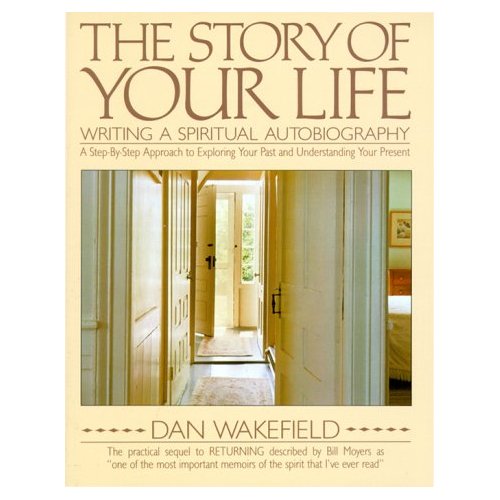
I will offer these “Story of Your Life” workshops (inspired by Dan Wakefield’s book of the same name) again.

Fun Without Screens

This is not my son, but looks exactly like my son.

In the spring I took away the kids’ privilege of screens and social media from Monday to Thursday nights.

School’s starting the day after Labor Day and I want to remind the kids (and myself) that real life exists beyond the computer, Xbox, Facebook, instant messaging, and texting.

Here’s how you can have fun without screens.

  1. Shop (in real stores, not on-line)
  2. Read books
  3. Give or get a manicure/pedicure
  4. Play board games
  5. Play cards
  6. Work out
  7. Do jigsaw puzzles
  8. Play basketball in Riverside Park
  9. Go for a walk, even around the block
  10. Do a splatter art project (like Jackson Pollock)
  11. Make a collage from magazines
  12. Make a scrapbook page
  13. Talk on the phone to Chicago cousins
  14. Sit on a stoop with a friend
  15. Go to the school yard
  16. Nap
  17. Bake cookies or brownies
  18. Take a bath
  19. Go swimming at the JCC
  20. Redecorate, move furniture around
  21. Practice gymnastics in the field
  22. Read comic books
  23. Make up a dance
  24. Sing
  25. Simply be awesome

Next 3 Saturdays Writing Workshop

Excited to be leading The Story of Your Life at the Heritage House in Westport, New York this Saturday morning. At this community center, I’ve struck a yoga pose and smiled at the plein air art shows. All in one place, my favorite things: yoga, art, and, now, for the last three Saturdays in August, from 10:30 to noon, creative writing.

This is Dan's book that inspires the workshop, The Story of Your Life.

The Heritage House http://www.westportheritagehouse.com/ was once a federated church, Baptist and Methodist. Now it is a visitor center and home to a community art show, the title of which I love — The Spirit of Place. I want to build the spirit of place into the writing workshop.

The Story of Your Life is inspired from the workshops led by my friend and mentor, Dan Wakefield, who also wrote a book by the same name. http://www.danwakefield.com/ If you’re anywhere in the Adirondack region, please join me in this place.

I sent this blurb to some Adirondack newspapers so I hope we get a few people:

Write about your life — from childhood through the present day –- the small, quiet moments and the large, public events. In this creative, supportive, and fun workshop, you will discover threads of humor and meaning through writing and sharing your writing.

This hour and a half workshop is intended for the experienced, casual, and non-writer. ($10/class)

The workshop is led by Mary Beth Coudal, a writer and teacher, whose essays have appeared in the New York Times, Self magazine, and other newspapers, magazines, and websites. Mary Beth blogs about creative writing at: http://gettingmyessayspublished.wordpress.com (that’s this blog, heh). She also writes about the spirit of New York at: http://mybeautifulnewyork.wordpress.com/ and she writes a lot more than that too.

And now I’m writing this blog in the third person, the first sign of narcissistic tendencies, so I must stop writing and start reading. As the saying goes, enough about me, What do YOU think about me?

I Search Myself

I google my name. And I find myself. Here’s what else I find:

Sites I have quoted quote me. Like the Poverty Initiative: http://www.povertyinitiative.org/news The internet is an echo chamber.

I am the only me. I love having a unique name. I don’t know if I’m one word or two — Mary Beth, MaryBeth or MB. I think I should go with MB because look where it got JK, better than had she been Kathleen.

I have no secrets. When I tweeted from the emergency room, yup that tweet remains google-able. While the internet remembers, I want to forget.

I have secrets. I actually have a secret garden — It is one of my 7 Rules: https://mbcoudal.wordpress.com/2010/06/07/214/

Google refines its searches of me in two other ways:
1. “gbgm Mary Beth Coudal” makes sense since I’ve published hundreds of articles at gbgm-umc.org. But the other search prompt is a bit of a surprise.

2. “mental illness mary beth coudal” Yes, I’m matched with the vast category of mental illness. Is the internet trying to tell me something?

(I think it is because one of my most reposted articles was on how church people could/should/might treat mental illness the same as they treat other illnesses — that is, with help, dinner deliveries, prayers, empathy, love…)

Those are a few of the things I learn when I google myself. What do you learn when you google your name?

Visiting Museums with Kids

Sometimes when traveling, you follow the leader. Just this week when the kids and I went to Chicago, my mother led us around the Museum of Contemporary Photography.

I loved the exhibit about infrastructure and public works at this free and open to the public museum, http://www.mocp.org, right off Michigan Avenue.

“How cool is this place?” I asked.

“Not so much,” they answered. One of my kids wanted to shop. Another wanted to swim at the hotel pool. And this one, just wanted out.

image

Independence Day

I let Hayden, my 14 year old, drive around the gravel road by the country house. He sat tall and proud. He was focused. He handled the minivan around the sharp turn as elegantly as if he’d been driving race cars his whole life. Which in a way he has — all that time in video arcades and gaming devices prepared him well for the finer motor skills necessary to

This was the 4th of July sunset over the Hudson River from the Amtrak train coming back from the country.

motor the family van.

He can’t wait to drive.

On the 5-hour drive to the country, from the backseat, my son asked, “Is it fun to drive?”

I had to think about it. Accelerating is nice. Passing people is sweet. Feeling the breeze from the wide open window is cool. Blaring music is happening.

“Yes, it is,” I said. “Driving’s fun.”

The best part of driving is that you feel independent. While my tall son may believe he’s ready to drive today, the quarter mile loop by the Big House is as far as he will go. He may be ready but I’m not.

Reversals

In Poetics, Aristotle said — yes, I’m smart like that, quoting Aristotle — we move from ignorance to knowledge, from enmity to friendship, from neutrality to commitment.

Lynne Barrett taught this juicy class on plot at the International Women’s Writing Guild this week at Yale.

In stories, she said, everyone has to have a piece of the puzzle. No one character can hold the whole story.

Lynne gave us the timeline from the movie, Casablanca (which I’ve never seen) in which Bogart’s character moves from nonchalance to commitment.

The flashbacks in the story move the story forward. People don’t just ruminate on their past for no reason. The lover’s past (in Paris!) sparks an understanding that propels them to take action.

In all narratives, a reversal is necessary. Cinderella goes from low status to high status. I always taught this in my drama classes, that this is what makes for comedy — a high-status character becomes low-status — or visa versa.

This is why Lynne said the story of Spitzer is a better plot than the story of Schwarzenegger. He fell from the top, not when he’d left office.

But the reversal is not just “who’s up and who’s down.” A secret become public. A single person becomes married.

This class nudged me to reconsider the lame plot in my young adult novel from last year’s NaNoWriMo (national novel writing month).

When I mentioned to Lynne, I had a novel, written in one month, she said, “Yes, Chris Baty, the founder of NaNoWriMo, wrote the book. No Plot, No Problem. No plot? Big problem!”

Incidentally, Barrett taught with my friend Dan Wakefield at Florida International University.

Book Proposal Questions

Melissa Rosati ended her workshop with these questions:

  • Is a book really the right first product for me? I love books. I have already blogged. So, yes.
  • What do I want the book to do for me? Make me a ton of money, earn me some street cred, get my distinct voice out there in the marketplace of ideas.
  • What is the relationship you want with your target audience? To empower people to share their ideas through writing. To inspire writing that leads to personal transformation. But, hmmmm, in terms of relationship, that’s a tough one. I don’t know. How committed does an author have to be to her readers? I’ll answer their emails, comment on their updates, teach workshops, attend readings, read their writing. But, let’s face it, all relationships take time. Do I have the time for another relationship?
  • If you do not have business experience, who are your trusted advisers? This is also a tough one for me. I do not like asking for help. I like being the helper. I’m not sure my peeps are business peeps.
  • What’s your budget? How much are you willing to risk? Ummm, $150 maybe?

These questions come from the workshop The New Rules of Book Proposals which I stumbled into late because the parking garage was literally a mile from the International Women’s Writing Guild classrooms on the Yale University campus. (And having a book published wouldn’t make the parking lot any closer.)

I wish I caught the beginning of the class because I have a lot to learn about book publishing.

Writing the Details

Here’s one of the sparkling gems from Southern writer Pat Carr’s Memoir and Fiction Writing class.

Set the scene with three or four details. Here are ten ideas of what Pat means by sensory details and then an example from me on my story set on a playground.

  1. Odor – wet sand
  2. A time of day or season – end of summer
  3. Temperature – warm and humid
  4. Sound – children laughing
  5. Important object – small charm bracelet
  6. Dominant color – beige
  7. Dominant shape — circles
  8. Something that can be touched – curly hair
  9. Taste – rain in the air
  10. Certain slant of light – late afternoon sun

I love number 10. Pat was inspired by Emily Dickinson. Love Dickinson: “Tell all the Truth but tell it slant.”

Light is so important, I think, as I write from a sun-soaked bench cloistered in a square at Yale University attending the International Women’s Writing Guild conference.

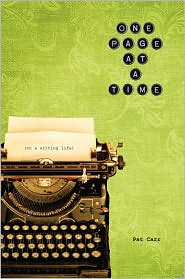
Pat Carr’s writing exercises, like this one, can be found in her book Writing Fiction with Pat Carr. Her new memoir is One Page at a Time: On a Writing Life.

Conflict in a Writing Workshop

I’m too tired from writing. I’ve been writing all day at the International Women’s Writing Guild at Yale University. In my first class I wrote a short short story that I love and want to get published.

I’m almost too tired to tell you about something that happened in my last class — how one of the teachers was talking about how a woman from Jehovah’s Witness came to her door. “I’m rewriting the Bible,” she told the woman. “Today a Psalm. Tomorrow a Lamentation.” And then the teacher showed the evangelist the Adirondack trees ablaze in orange and red outside her window, “These are my burning bushes.”

And the class laughed. But one woman, wearing a batik dress got up. She was behind me. The teacher asked, “Are you leaving because you’re leaving or something I said?” And the woman said, “I’m of that faith. And we believe in the Bible.” She was offended. She did not believe just anyone could write or rewrite the Bible. It was very tense. A few quick words. The student said, “I believe the word can raise the dead.”

“So can my word,” said the teacher. “Can’t we all be prophets?”

“No, not like that.” They disagreed. They stood their ground. “I have to leave.” And the teacher said, “Don’t leave without a hug.” They hugged. The teacher put on a short video. After the video, the teacher said, “We mustn’t live in fear. This is what we’re up against.”

The teacher gave us an assignment to write a blessing, a praise or prayer of gratitude.

After some of us read our writing, the teacher asked for feedback on the conflict with the woman who’d left. One person said, “We all laughed when you said a Jehovah’s Witness came to your door. I feel bad about that.” Another said, “I felt like leaving too.” I said, “I avoid conflict at all costs so I was interested to see how you’d handle it.” The woman beside me said, “It would make a good story.” More than a dozen of us commented on the conflict.

Then we went back to another writing exercise: write something from the Bible from a woman’s point of view. I wrote something funny and true about Martha and Mary.